Helmet buying guide
Choosing your skydiving helmet: full face or open face?
The best starting point is not a trend or a spec sheet. It is the helmet style that matches how you jump, what you need to feel comfortable and what you will actually wear.


The short answer
Choose the helmet that fits your jump, not the trend.
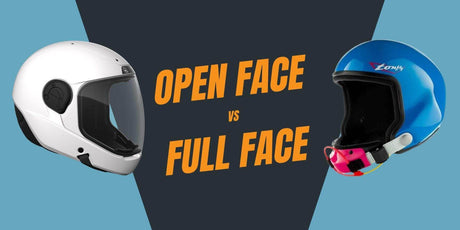
A full-face helmet brings a visor, more shelter from wind and weather, and a more enclosed feel. An open-face helmet keeps things simpler, cooler and more exposed. Neither is automatically “better”—the right choice depends on how and where you jump.
Two routes
Full face or open face?
Start with the practical differences. These are the trade-offs most jumpers notice first—not a long spec sheet.
Full-face helmets
A visor and chin coverage create a more protected, quieter-feeling environment in freefall. It is often the natural direction if wind, cold days or facial coverage are high on your list.
- Wind & weather: visor coverage helps keep wind, cold air and debris away from your eyes and face.
- Freefall feel: the enclosed shell can reduce perceived wind noise.
- Practical trade-off: they can feel warmer and generally cost more than an open-face model.
Open-face helmets
The classic, unfussy route. Open-face helmets protect the head while leaving your face open, which many jumpers value for airflow, direct awareness and a lighter-feeling setup.
- Airflow & comfort: a familiar choice for warm conditions and those who dislike an enclosed visor.
- Simple setup: often a more affordable way into a proper skydiving helmet.
- Practical trade-off: expect more wind noise and plan on goggles or suitable eyewear for eye protection.
Models to compare
Start with the route. Then compare real helmets.
These are useful current models to compare inside each category. Price and availability are rendered live from Shopify; fit remains the deciding factor.
Full-face models to compare
For jumpers who want an integrated visor and a more enclosed feel.

Premium/custom full-face comparison
Tonfly TFX Helmet

Modern Cookie full-face comparison
Cookie G35 Skydiving Helmet

Protection-first Cookie comparison
Cookie G4 Skydiving Helmet
Open-face models to compare
For jumpers who prefer direct airflow, a simpler setup and separate eye protection.

Classic open-face comparison
Cookie Fuel Skydiving Helmet


Tonfly open-face comparison
Tonfly Ice Skydiving Helmet
Make it personal
Which direction sounds like you?
You do not need to overthink the first filter. Use your normal conditions and priorities to choose a starting point, then focus on fit and the individual model.
“I want a visor and more shelter.”
Start with full face. It is usually the more comfortable conversation when you often jump in colder conditions, dislike wind on your face, or want integrated eye coverage.
“I run hot and want it uncomplicated.”
Start with open face. You may prefer the airflow, lighter-feeling setup and straightforward use of separate goggles or eyewear.
“This is my first proper helmet.”
Prioritise fit before category. A well-fitting, approved model you will actually wear consistently matters more than copying another jumper’s choice.
“I am building a specialised setup.”
Check the exact model and rules. Camera and other specialised uses have their own compatibility, manufacturer and drop-zone requirements; do not assume a helmet is suitable simply because of its shape.
Before you choose
Four checks worth making.
Once you have a direction, these questions are more useful than trying to score every helmet on one universal scale.
-
01Conditions: Are you mostly jumping in hot weather, cold air, or both?
-
02Eye protection: Do you prefer an integrated visor or separate goggles/eyewear?
-
03Routine: Will you be happy caring for and using the helmet’s closure and visor system every jump?
-
04Budget: Set a realistic range, then compare fit, replacement parts and the specific features you will genuinely use.
Next step
Choose the category first. Compare the right models second.
Once you know which route suits you, use the recommendations above to compare fit, comfort and the exact model details. If you are unsure, our team can help you narrow the list before you order.